We take bugs seriously. In the following paragraphs you will read about deworming protocols and preventative measures for internal and external bugs here at Minn E Acres. In no way am I giving advice, this is just what we do here.
External parasites
Lets start with external parasites. We rotate several topicals monthly and will list them with their dose and what they treat/prevent. Visual checks for external parasites are a waste of time. Many you cant see unless under a microscope. I often hear new herd owners stating ‘I have never had lice!” Well, you have but you are just to oblivious and arrogant to realize it.
When applying the topicals, It is important to part the hair to apply directly to the skin. You start at the base of the neck and apply it in spots all the way to the base of the tail.
Eprinex (mites) 1cc per 20 lbs-preventative-apply every 30 days and 1 cc per 10lbs as a treatment every week. We use this in the winter months.
Pour on ivermectin ( lice, mites)1 cc per 25lbs apply every month. We use this in the winter, spring, and fall months
Cylence (lice) 1 cc per 25lbs monthly. We actually stopped using this in 2023. We use Ultra Boss in place.
Ultra boss (mosquitos, biting flies, lice) 1 cc per 25 lbs. We apply monthly in summer months.
In summer months, we do spray their dry lots and buildings with permitherin based solution and keep the manure cleaned up daily to keep flies at a minimum. In winter months we apply topicals to prevent mites. We rotate them monthly only using one topical. Prevention is much easier than treatment when it comes to mites.
Internal parasites
Internal parasites can deplete a goat quickly. We really prefer to feed grain and hay in a manner that doesn’t allow parasite ingestion. Keep hay up off the ground and in feeders. Offering grain in a “head through” system that doesn’t allow them to defecate in trays or bowls. Rotate your pastures and understand what parasites affect your specific area. Fecal egg counts, while cost money, are the best approach to tackling parasites. Work with a lab or veterinary clinic and choose the best test. We prefer the McMaster test. Parasite blooms can happen when an animal is stressed. Stresses can be many things but not limited to; giving birth, moving, illness, change in schedule, change in food, herd dynamic change, weather, owner on vacation, and etc..
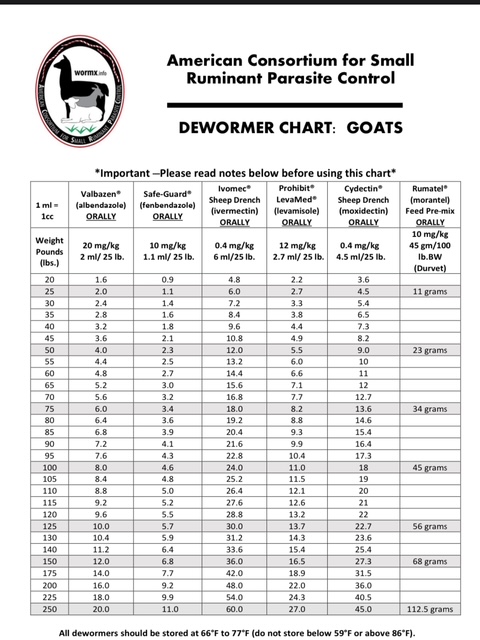
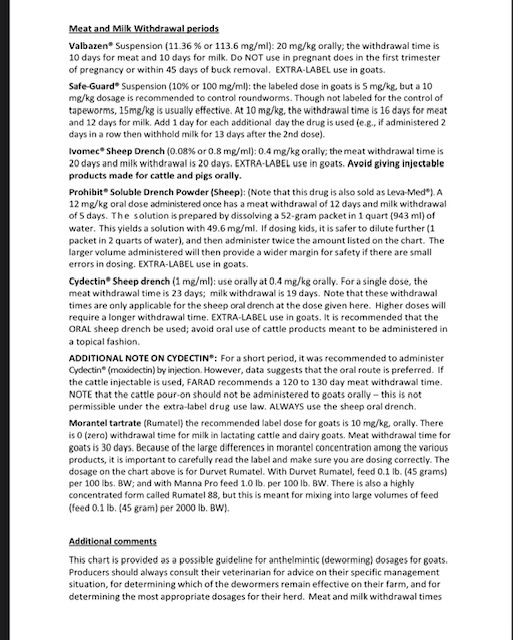
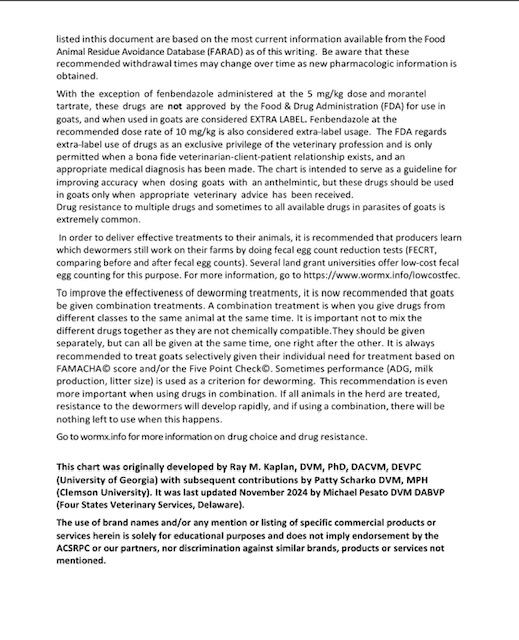
When the time presents itself and you need to deworm its very important that you give enough de wormer. De wormer doesn’t kill the parasites but simply paralyzes them so they can be passed. You want to make sure you paralyze as many as possible. We dual de worm which is giving two classes of de wormer. We also dose 2x or even 3x the recommended amounts on the labels. Many de wormers are off label use for goats and you should understand that they metabolize much more quickly than any other ruminant. Below is the chart from the American Consortium for Small Ruminant Parasite Control- specifically goats. This chart is on average indicating at least dosing 2x the de wormer labels amounts. I choose to do 3x as I have had great outcomes. If you are experiencing a heavy worm load, repeating the doses again in 10-14 days is very important. There are several life stages to parasites and de wormers might not be efficient in some early or late stages. I do not recommend treating whole herds unless there were serious management issues or instructed by a veterinarian. I do recommend treating age groups such as all kids 4-8 months old getting a fall de worming or a spring de worming. In this case- kids getting treated in fall or spring- I do recommend treating with Quest Plus and treating at a rate of 250lbs of horse de wormer to every 50lb of kid. This comes out to about 2ccs. You can also treat with Cydectin and Valbazen and see the same results. I prefer Quest plus because it seems to rid them of tapeworms. While tape worms don’t cause any issues per professional research, I often see a growth spurt following the treatment. My opinion is that all livestock struggle with a tape worm load till around 2 years old when they have a resistance built.
Preventative is the best option when it comes to parasite control and any resistance built to de wormers. Administration of oral de wormers can be troublesome and I recommend you have help and keep documentations of all medicine given. Store all meds according to their label and keep in in mind that saliva can break down any meds. Never re dip a syringe into the main container but have an extra container to pour your oral meds into. You can always use a different syringe each time as well. Remember it takes a significant amount of de wormer to harm your goat. For example, I accidently gave an entire 1250lbs tube of horse de wormer to a yearling goat and she had no symptoms and is still living her best life at a friends farm. That doesn’t mean you should go out and do this. It simply means your goat will be ok after de worming. Feel free to ask questions.
 Minn E Acres Farm